


Recently, a Shandong tourist Dong Shengze sat in the courtyard of Zhiqing Rural Resort Hotel, gazing at the distant green mountains and waters, expressing the unique appeal of Beihu Homestay Inns.
In Beihu District, homestay inns are not only a resting place on the journey, but have also become a bridge connecting mountain and water resources with market demand. Through the revitalization of old houses, innovative models, and the integration of business formats, the homestay inn industry in Beihu District is rising rapidly, becoming a new driving force for regional economy and common prosperity of scenic areas and villages.
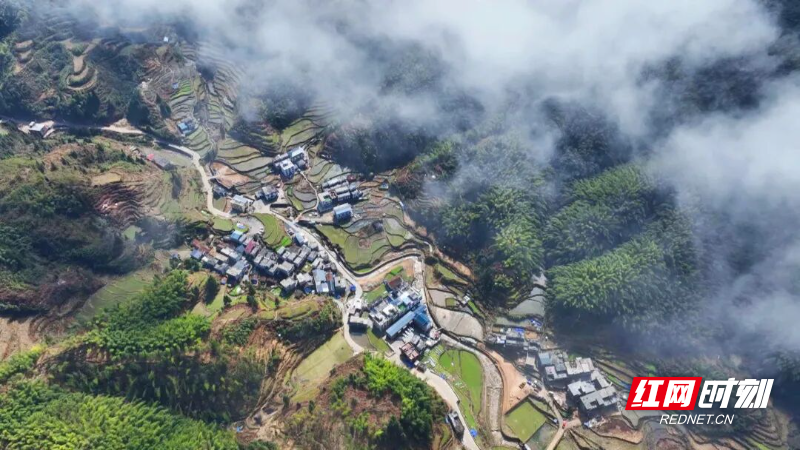
Beihu District decided to develop the homestay inn industry based on its own resource endowment, geographical advantages, and economic development needs.
Beihu District boasts unique ecological and cultural resources, with a forest coverage rate of 69.6% and air quality reaching the national second level standard for six consecutive years.
There are many scenic spots such as Yangtian Lake Grassland, Wanhuayan Provincial Scenic Area, Longnyu Hot Spring and Deng Hua’s Former Residence in Beihu District, forming a unique foundation for the homestay inn industry.
As the “southern gateway” for Hunan Province to connect with the Guangdong-Hong Kong-Macao Greater Bay Area, Beihu District has remarkable transportation advantages. The Beijing-Guangzhou double-track railway and the Wuhan-Shenzhen high-speed railway build a “one-hour economic circle”. The Beijing-Hong Kong-Macao Expressway, National Highway 107, and Xiamen-Chengdu Expressway contribute to an “all-weather self driving tour” network. Beihu Airport has air routes to Beijing, Shanghai, Xi'an, Haikou, and other destinations.
This three-dimensional transportation system not only facilitates domestic tourists, but also attracts a large number of foreign tourists such as South Korea.
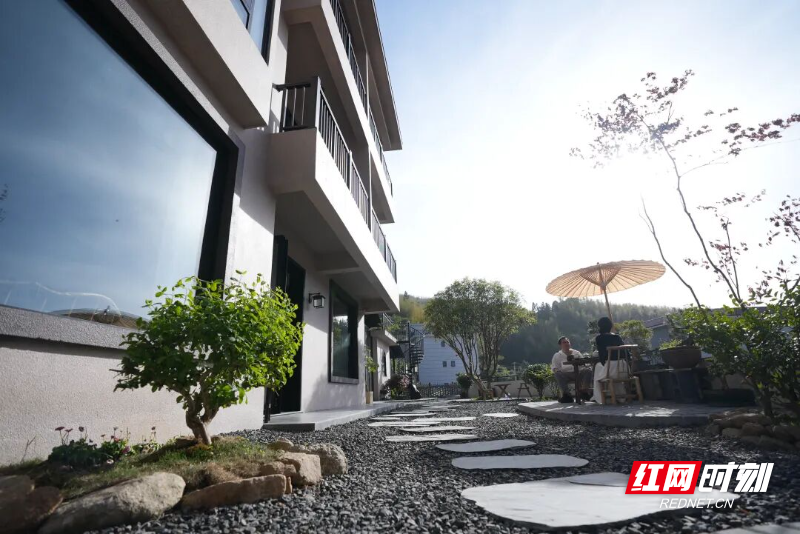
Luling Homestay Inn Village benefits directly from the convenient transportation. It’s located just a 10-minute drive from Beihu Airport and a 20-minute drive from the high-speed railway station.
“It’s very close from the high-speed railway station, and the scenery here is good.” A tourist from Guangdong province said that it is only about 30-minute drive from the surrounding attractions, and the farthest drive is only an hour, making it their first choice for accommodation in Chenzhou.
“The convenient transportation and warm hospitality exceeded my expectations.” A Korean tourist who came to visit the Yangtian Lake Grassland, also praised the transportation.
The Chenyang Highway connects core scenic spots such as Yangtian Lake Grassland, Xiaobu Ancient Village, and Beihu Sleepless, precisely meeting the travel needs of self driving tourists who want to “travel on their ways”.
Driven by the demand for economic development, the homestay inn industry has become the core driving force for the rapid development of the tertiary industry and the integration and upgrading of the primary, secondary, and tertiary industries in Beihu District.
During the 8-day National Day and Mid-Autumn Festival holiday this year, Beihu District received a total of 1.4759 million tourists, with a total tourist expenditure of 1.392 billion yuan.
To enhance the overall competitiveness of the homestay inn industry, Beihu District is striving to create its own distinctive homestay inn economic pattern. At present, more than 110 boutique homestay inns have been cultivated, among which Hushang Yunju, Zhiqing Rural Resort Hotel, and Songyin Homestay have been rated as “Five Star Tourist Homestays in Hunan Province”, which are also actively applying for national first-class homestays.
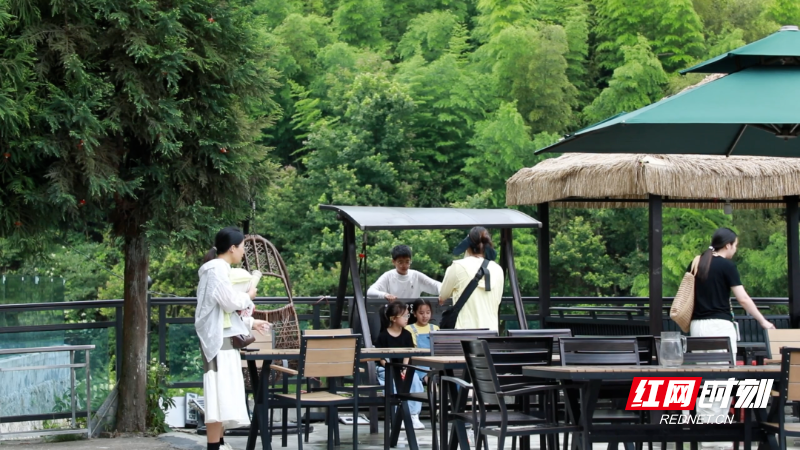
“To form a golden triangle of rural revitalization among villagers, tourists, and makers, we need to use product thinking to develop rural industries,” said Chen Bibo, the manager of Zhiqing Rural Resort Hotel, sharing his experience.
The “Zhiqing Art Village and Featured Homestay Inns” model he created has driven local villagers to achieve an average annual income of 35,000 yuan per capita and a fivefold increase in village collective income.
Through the combination of homestay inns with cultural creation and camping, Beihu District has continued to extend its industrial chain and enhance its industrial value.
In 2024, the total number of tourists received by homestay inns in Beihu district reached 527,000, generating a revenue of 158 million yuan and indirectly driving employment for 3,500 people.
Empowered by advantageous resources and location advantages, the homestay inn industry in Beihu District has seen rapid development and achieved significant results in rural revitalization through multiple measures such as model innovation, brand building, and business integration.
In the future, Beihu District will continue to promote the development of the homestay inn industry, provide tourists with better experience, and contribute more to rural revitalization.
Chinese source: rednet


 湘ICP备13003667号
