


Recently, in the classroom of Class 350, Grade 2 of Xiangnan University Affiliated Primary School, children gathered around the podium, pointing curiously at the pattern on the screen. This was a special art education class taught by Professor Li Lizhen from the School of Fine Arts and Design, Xiangnan University.
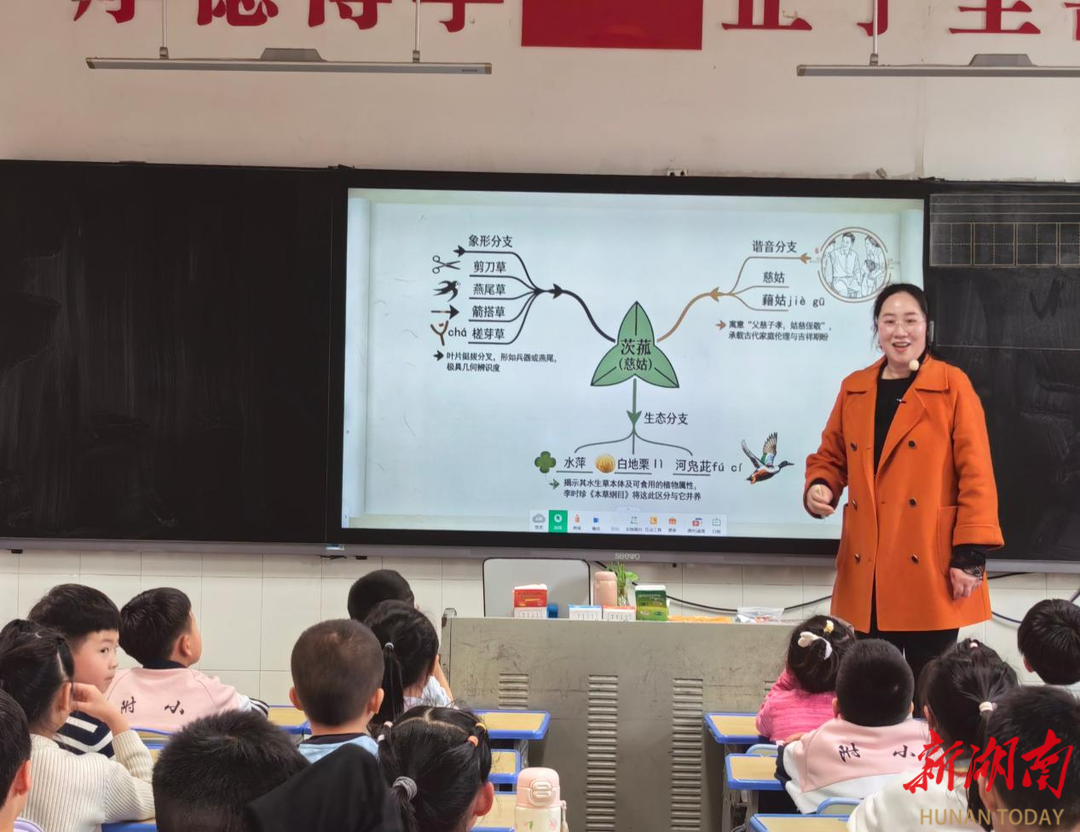
Sagittaria sagittifolia leaf, an arrow-shaped blade, has been a part of traditional Chinese patterns for a thousand years. Starting with its growth environment, Professor Li Lizhen cited the record in the Compendium of Materia Medica that “one plant bears twelve seeds”, guiding the children to learn about this ancient plant through the story. She then presented teasures from the Palace Museum,including a round red lacquer box carved with lotus and sagittaria patterns and an exquisitely shaped lacquer plate with hornwort and sagittaria leaf designs. The children were surprised to discover that ancient people not only painted these leaves in paintings, but also crafted them into lacquer plates and carved them into buildings, endowing them with the auspicious meaning of “many children and great blessings”.
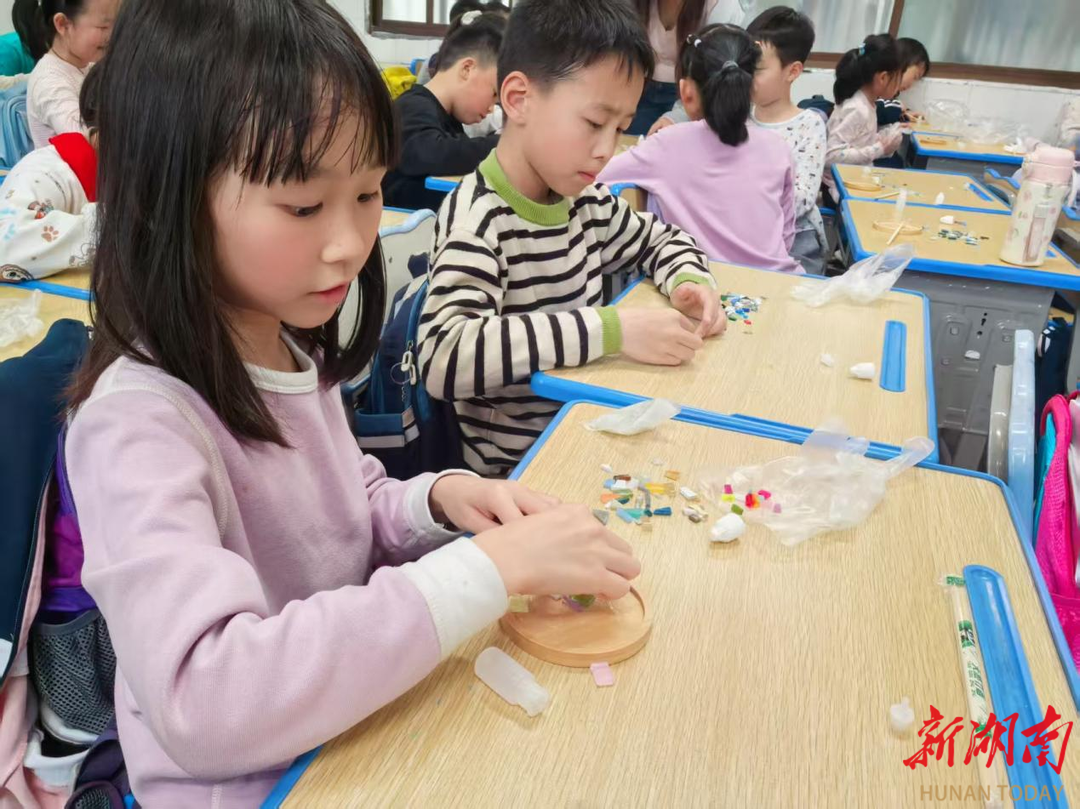
The handicraft session was the highlight for the children. Under the guidance of Professor Li Lizhen, the children created collages on round wooden bases using colorful mosaic pieces. Some outlined the shapes of leaves, while others boldly combined different colors, sparking bursts of cheers in the classroom.
This class vividly presented Li Lizhen's years of research on traditional Chinese decorative art. She transformed the originally profound and obscure academic studies into cultural materials that primary school students could see, feel and understand.
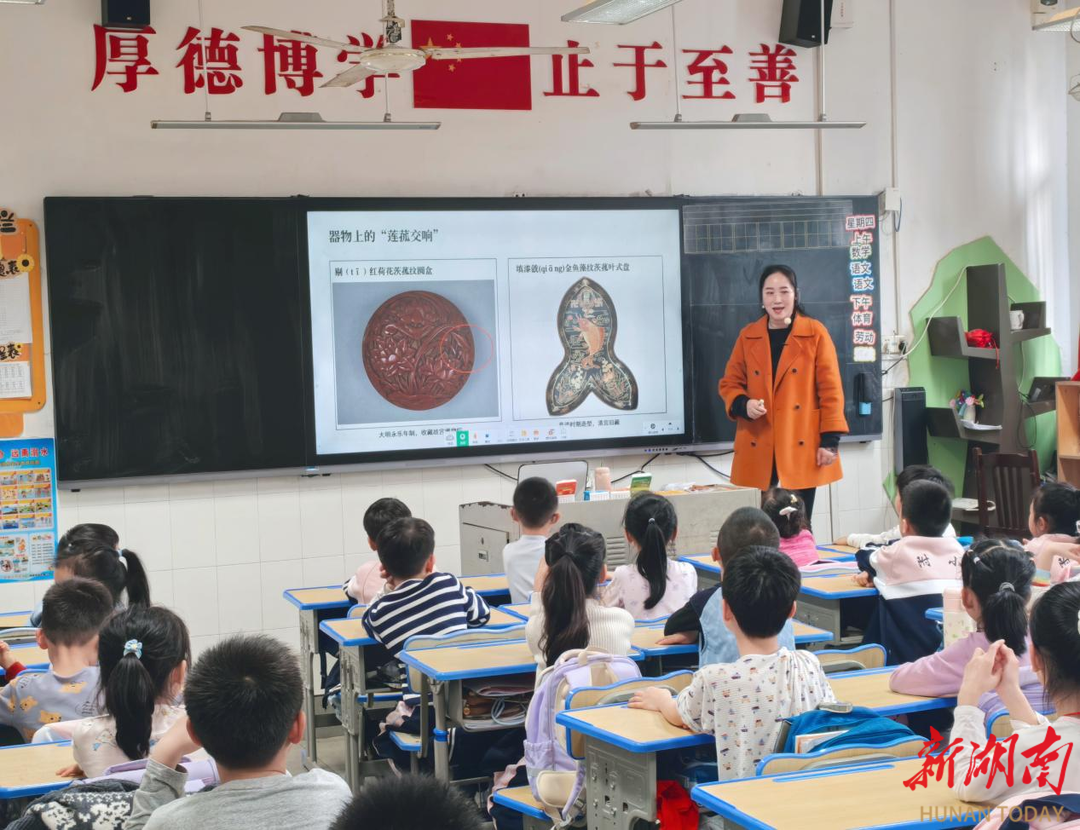
From the appreciation of cultural relics to hands-on creation, the art education resources of universities effectively extended to basic education classrooms at this moment.
In recent years, Xiangnan University has fully leveraged its advantages in art education to encourage its faculty to enter primary and secondary schools, transforming academic research into popular science courses for teenagers.
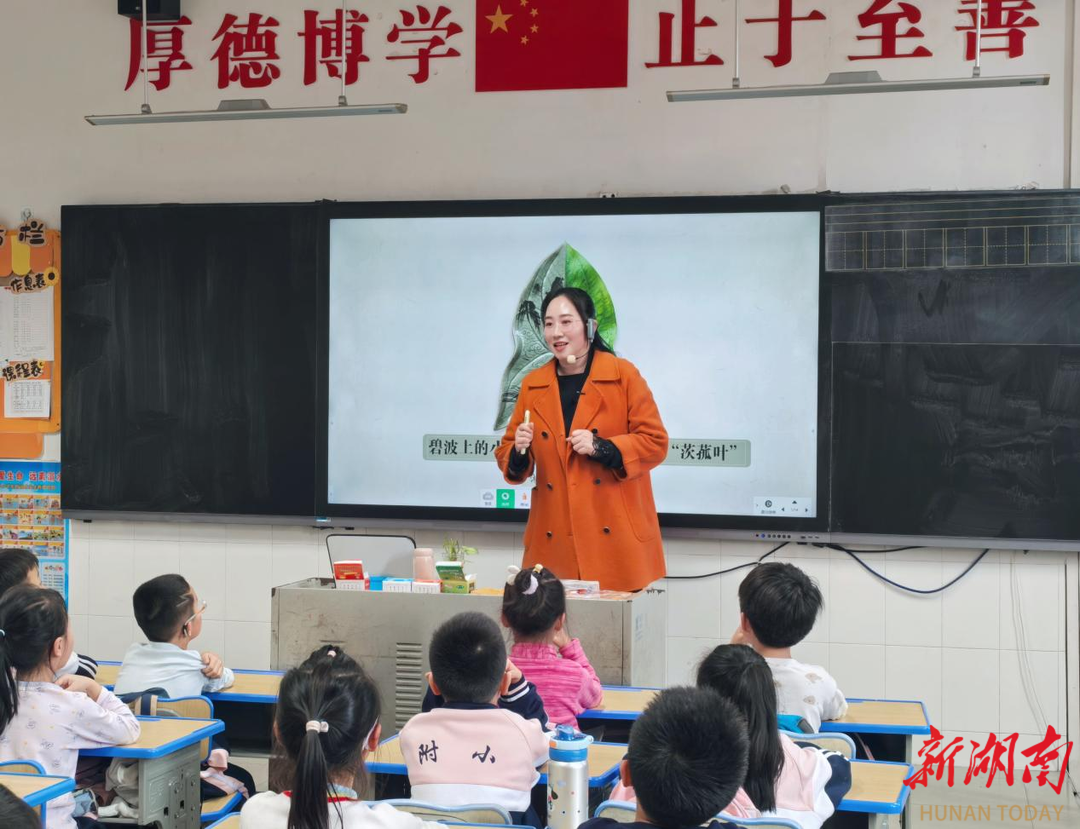
This is a vivid practice of the integration of art education in primary, secondary and higher education, allowing academic research to truly serve children’s aesthetic development and creativity cultivation, and enabling the excellent traditional Chinese culture to be passed down through generations, and to rejuvenate in the innovative and creative ideas of young people.
Chinese source: hunantoday


 湘ICP备13003667号
