


A cultural exchange event themed around Zhou Dunyi's “Tai Chi Diagram” was held at Guanlan Academy in Chenzhou on January 23. Eleven tourists from the South Korean Confucian Association of Ruiyan Society highly praised the Picture Exhibition of Evolutions of Tai Chi Diagram.
This exhibition is based on the historical images of Zhou Dunyi's “Tai Chi Diagram”, systematically exploring the evolution of Tai Chi Diagram from the Song Dynasty to the Ming and Qing Dynasties, which outlines the dissemination and influence of Tai Chi philosophy in China and even East Asia.
“Around 1049 AD, the first year of Emperor Renzong of the Song Dynasty, which was also the last year of Zhou Dunyi's tenure as the magistrate of Chenxian County, the two brothers, Cheng Yi and Cheng Hao, who studied under him had increasingly solid foundation of knowledge, so Zhou Dunyi personally presented the ‘Tai Chi Diagram’ to them. They founded ‘Luo Xue’, which was passed on to Zhu Fuzi and Zhang Nanxuan, who further developed and promoted it, making it the core document of “disposition and heavenly principles” and the core symbol of East Asian culture.
Chenzhou is the birthplace of the ‘Tai Chi Diagram’, and the founding spirit of South Korea was influenced by the ‘Tai Chi Diagram’,” said Zhang Jinghua, dean of Zhou Dunyi Research Institute of Xiangnan University.
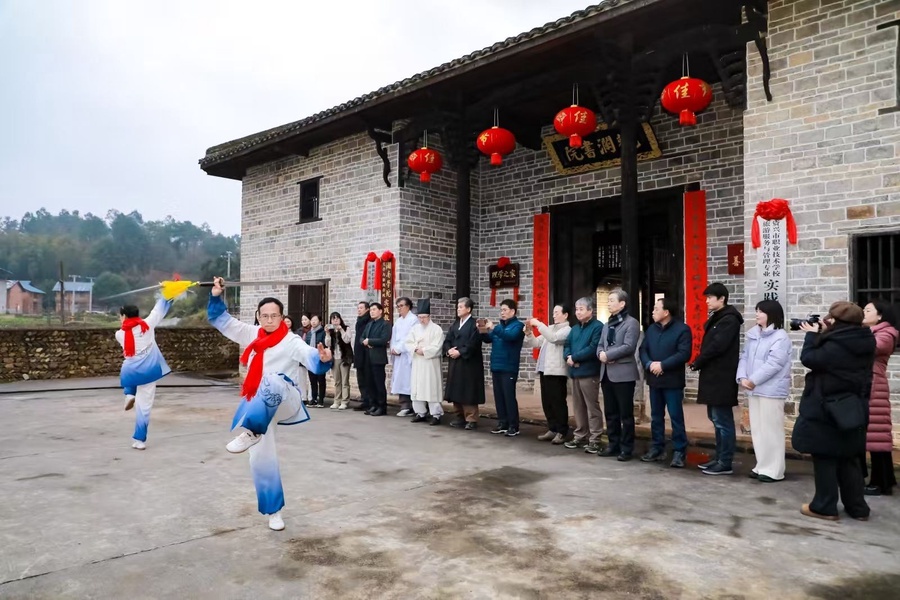
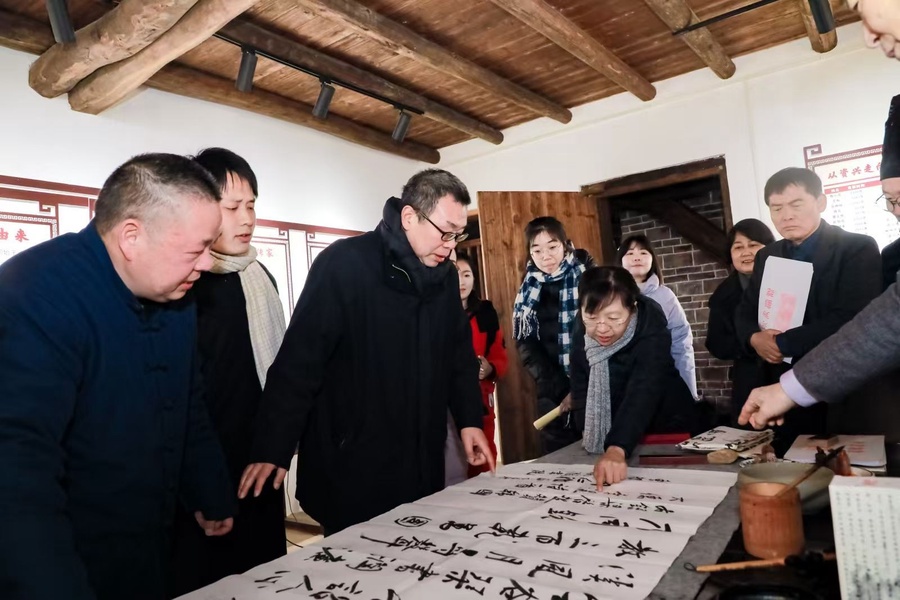
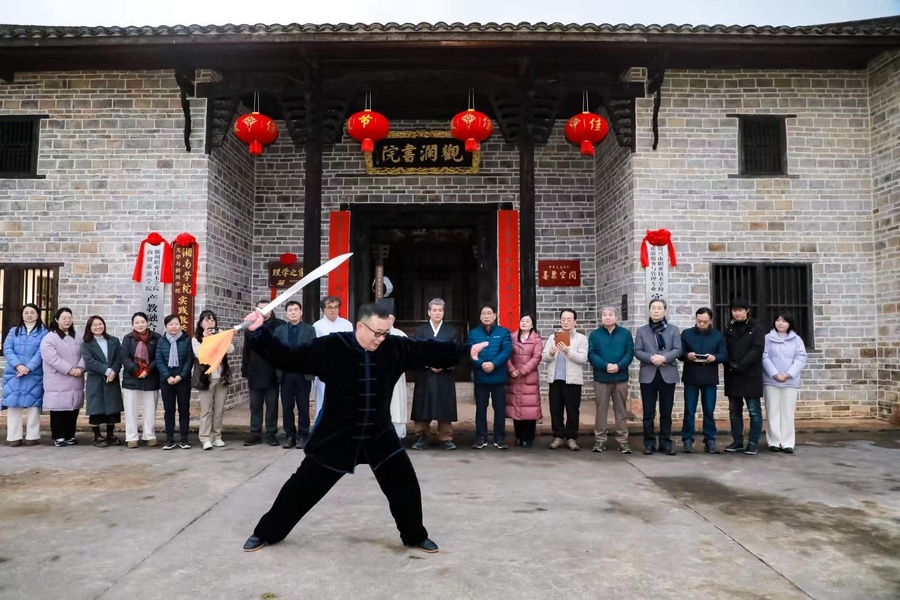
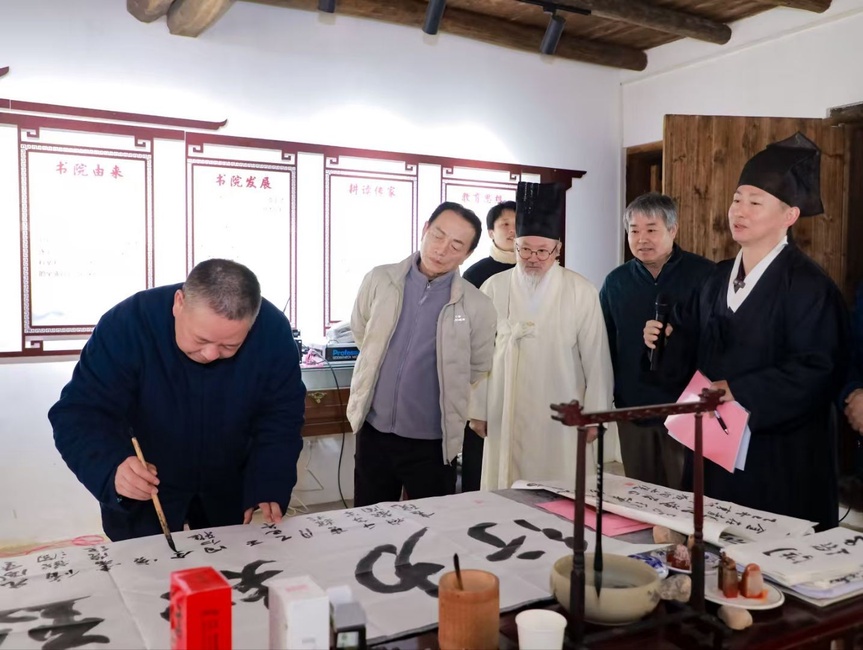
At the event, a delegation from the South Korean Confucian Association, Ruiyan Society, watched the performances of Tai Chi and Tai Chi Sword, and appreciated the calligraphy creation of Cao Hui, the 29th generation descendant of the Cao family, before visiting Guanlan Academy.
Li Guansheng in the delegation said, “This exhibition allows us to intuitively feel the profound origins of Tai Chi culture and the profoundness of Zhou Dunyi's Neo Confucianism. Especially when we saw the historical connections between Korean Confucian scholars and the Lianxi Academy and Guanlan Academy in Chenzhou, we realized the value of cultural exchanges between the two countries.”
The “Tai Chi Origins Picture Exhibition” reflects the historical context of the founding of the “Tai Chi Diagram” in Chenzhou and its enormous influence in Korea. The Ruiyan Society of Korea and its delegation were the first visitors to the exhibition.
This exhibition is not only a concentrated display of the academic achievements of Lianxi Neo-Confucianism, but also one of the practices of Guanlan Academy in promoting the international dissemination of Neo-Confucianism.
Zhang Jinghua expressed his hope to use Tai Chi philosophy as a bridge to continue deepening the dialogue and cooperation between China and South Korea in the fields of Confucianism and traditional culture.
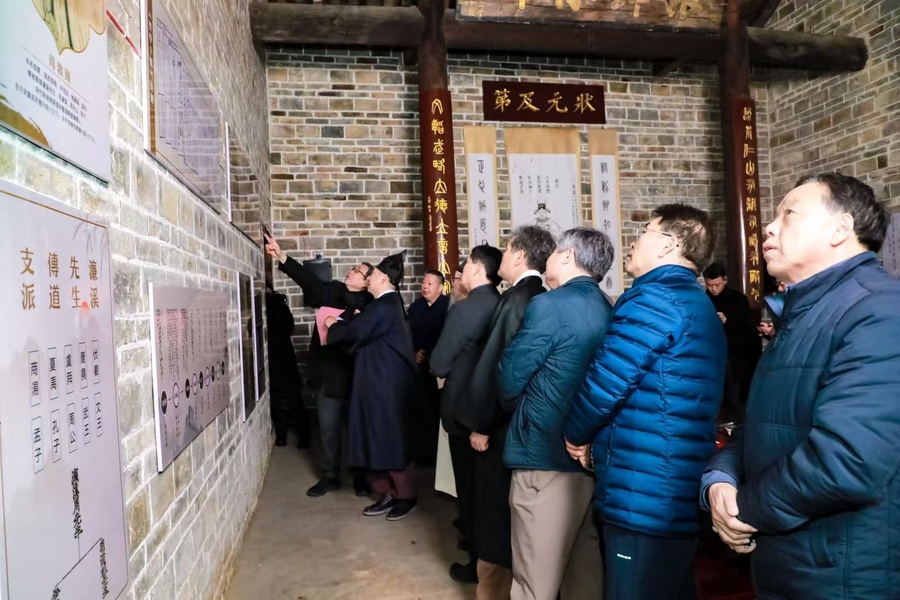
Guanlan Academy was founded by the Cao family. It was an important inheritance center of Lianxi Neo-Confucianism during the Song and Yuan dynasties, from which a top scholar Cao Yiben in Yuan Dynasty came.
The unique value of Guanlan Academy lies in the completeness of its academic heritage. It’s always maintained openness in academic studies.
During the Song Dynasty, Zhou Dunyi founded the Lianxi Book Hall on Yujiang Mountain in Chenzhou. Later, Cao Jing founded the Guanlan Academy in Zixing, Chenzhou. At the same time, there was Chengang Academy in Chenzhou, Yuelu Academy and Chengnan Academy in Changsha, Biquan Academy in Xiangtan, Heshan Academy in Jingzhou, and Shigu Academy in Hengyang, all of which are precious historical relics of the Hunan culture. They are also important places for the inheritance of Confucianism, Neo Confucianism and Tai Chi philosophy.
Chinese source: hunantoday


 湘ICP备13003667号
